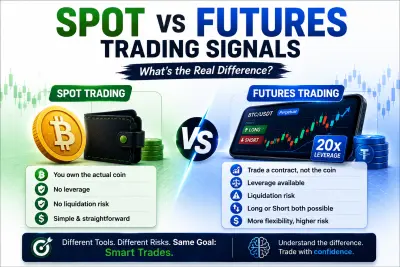
Learn how spot trading signals and futures trading signals differ, why leverage and liquidation change the meaning of a stop loss, and how to size a position correctly on each market type.
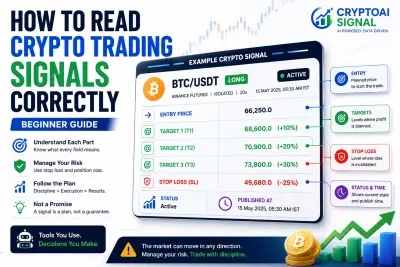
Learn how to read crypto trading signals the right way. This guide explains each part of a signal, what a signal does not tell you, how to understand status labels, and the common mistakes that cause traders to misread a trade idea.
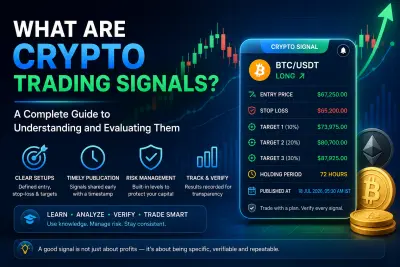
Crypto trading signals are published trade suggestions with defined entry, stop-loss and target levels. This guide explains where they come from, how they are produced, what every field in a published signal means, the different types that exist, and the limitations no provider can solve — then points to dedicated guides on judging signal quality, verifying a published signal, and choosing a provider.
Compare how AI systems and human analysts generate crypto trading signals, including speed, consistency, and bias, plus how to evaluate any signal source before using it.
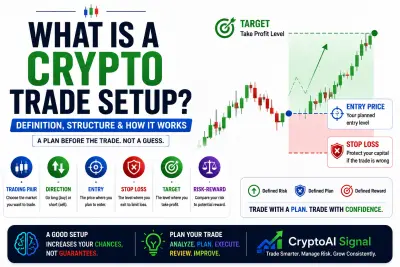
Learn what a crypto trade setup is, the core components it includes, and the step-by-step process traders use to construct entry, stop loss, and target levels before placing a trade.
Learn how crypto risk management works, why it matters, and how to protect your trading account. This guide explains risk per trade, position sizing, stop losses, risk-reward ratio, leverage risk, and the common mistakes that damage traders over time.