Quick Answer
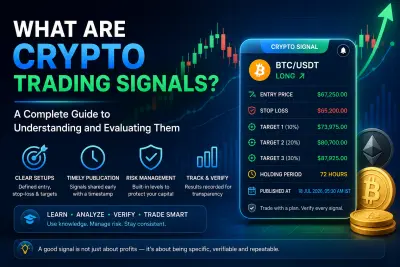
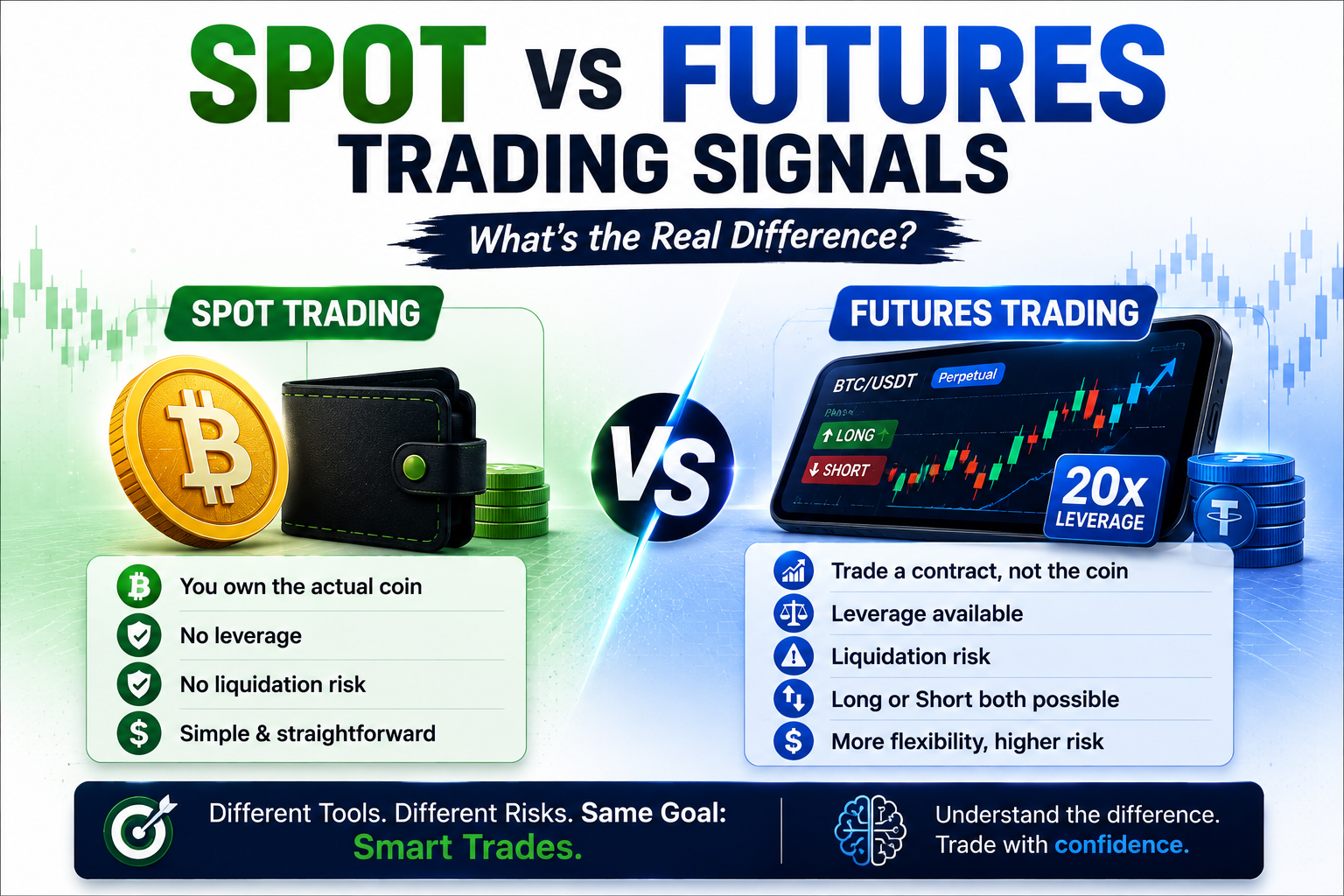
Spot trading and futures trading are two different ways to trade crypto assets, and each one changes what a trading signal actually means. A spot signal tells you to buy or sell the real coin. A futures signal tells you to open a contract that tracks the coin's price, usually with the option to use leverage and to trade both long and short. The contract type changes the risk, the position size, and how a stop loss or target should be read.
What Is Spot Trading?
Spot trading means buying or selling the actual cryptocurrency. When you buy Bitcoin on the spot market, you own the Bitcoin. It sits in your wallet or exchange account until you sell it.
Spot trading has a few clear features:
You pay the full price of the asset upfront.
You cannot lose more than the amount you invested.
You can only profit if the price goes up, unless the exchange offers a separate spot margin product.
There is no expiry date and no funding fee.
Spot trading is the simplest way to hold crypto. Most beginners start here because the risk is limited to the money they put in.
![IMAGE 1 [A7].png](/uploads/webp/db904e049a181f8ea27d307c8518d4d4.webp)
What Is Futures Trading?
Futures trading means trading a contract that is based on the price of a cryptocurrency, not the coin itself. In crypto markets, most futures contracts are perpetual futures, which means they do not have an expiry date like traditional futures contracts.
Key features of futures trading:
You can open a position with leverage, which means you control a larger position size with a smaller amount of capital.
You can go long, betting the price will rise, or short, betting the price will fall.
Futures positions can be liquidated if the price moves against you enough to wipe out your margin.
Perpetual futures include a funding rate, a periodic payment between long and short traders that keeps the contract price close to the spot price.
Futures trading gives more flexibility than spot trading, but it also increases risk because of leverage and liquidation.
What Are Spot Trading Signals?
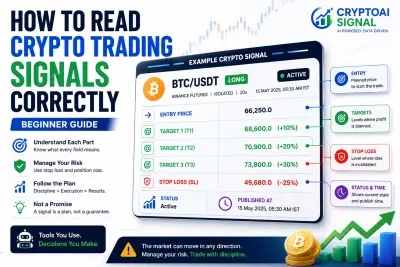
A spot trading signal is a trade idea built around buying or selling the actual coin. It usually includes:
Entry price
Stop loss
One or more target prices
Trade direction, which is almost always "buy," since most spot markets do not support shorting
Because there is no leverage, the risk on a spot signal is easier to understand. If the entry is $100 and the stop loss is $90, the maximum loss is 10% of the amount used to open that position, before fees.
What Are Futures Trading Signals?
A futures trading signal is a trade idea built around a perpetual futures contract. It includes the same core elements as a spot signal, entry, stop loss, and target, but the outcome depends on more variables:
Leverage the trader chooses to apply
Position size relative to account balance
Long or short direction
Liquidation price, which depends on leverage and margin mode
A futures signal with a 10% move to the stop loss does not mean a 10% loss for the trader. If leverage is applied, the percentage loss on the trader's margin is larger. This is one of the most misunderstood parts of futures signals.
Key Differences Between Spot and Futures Signals
Factor Spot Signals Futures Signals Asset owned Real coin Contract tracking the price Leverage Not available Optional, chosen by the trader Direction Mostly long, buy only Long or short Liquidation risk None Possible, depends on leverage Funding fee None Periodic, for perpetual contracts Loss on stop loss Equal to the price move Amplified by leverage Complexity Lower Higher
Why the Entry, Stop Loss, and Target Mean Different Things
The published entry price, stop loss, and target levels in a signal are almost always based on the market price of the asset, not on a specific leverage or position size. This is true for both spot and futures signals.
What changes between the two is how that price move turns into an actual result for the trader:
On a spot trade, a price move and a percentage gain or loss are the same number.
On a futures trade, the trader's leverage decides how much that same price move affects their margin. A 10% price move can mean a 10% result at 1x leverage, or a much larger result at higher leverage.
This is why a signal provider publishing futures-based levels should make clear that the published levels describe price movement, not a guaranteed personal return, since the final result depends on the leverage and position size the trader chooses.
![IMAGE 2 [A7].png](/uploads/webp/95b96713f654c0985f33b58d9b0f2f67.webp)
Long-Only vs Long-and-Short Signals
Spot markets are mostly long-only, since most exchanges do not let you short a coin you do not own without a separate margin product. Futures markets remove that restriction. A futures signal service can publish long and short signals, or it can choose to focus only on long setups.
A long-only futures signal service still trades futures contracts and can still use leverage. Long-only simply means the signals only look for upward price opportunities and do not include short setups. This is a choice about market direction, not about whether the product is spot or futures.
How CryptoAI Signal Fits Into This
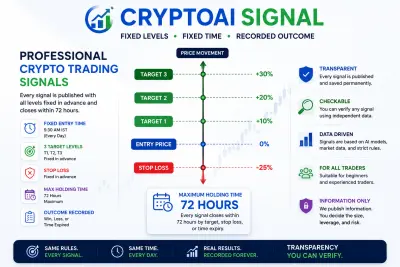
CryptoAI Signal publishes signals on Binance Futures perpetual markets, and the signals are long-only. Each signal includes an entry price, take-profit targets, and a maximum stop loss based on the price of the underlying asset.
Leverage is not part of the published signal. It is a choice the trader makes when they execute the trade. A trader can follow the same signal levels on the spot market with no leverage, or on the futures market with the leverage they decide is appropriate for their own risk tolerance. The published stop loss reflects a price level, not protection from liquidation, since liquidation depends on the trader's own leverage and margin settings.
Common Mistakes When Using Spot or Futures Signals
Applying a futures signal's stop loss percentage directly to a leveraged position without adjusting for leverage.
Assuming a long-only futures signal means the product does not use leverage.
Ignoring the funding rate on perpetual futures positions held for several days.
Treating a spot signal's target price as a guaranteed price the market will reach.
Not checking whether a signal was designed for spot or futures markets before choosing a position size.
How to Choose Between Spot and Futures Signals
The right choice depends on the trader's experience and risk tolerance, not on which one is better.
Spot signals may suit traders who:
Are new to crypto trading
Want to avoid liquidation risk
Prefer to hold the actual asset
Have a lower risk tolerance
Futures signals may suit traders who:
Understand leverage and margin
Want the option to trade both long and short
Are comfortable actively managing liquidation risk
Have experience sizing positions relative to their account
Traders should also confirm which market a signal provider is actually using before following any published entry, stop loss, or target level, since applying futures-style position sizing to a spot trade, or spot-style sizing to a leveraged futures trade, can change the real risk significantly.
![IMAGE 3 [A7].png](/uploads/webp/f98945b87c6f6a77b4f4635188373e4b.webp)
Frequently Asked Questions
Can the same trading signal work for both spot and futures markets?
The entry price, stop loss, and target levels can look similar, since both are based on the price of the asset. But the trader's actual result will differ, because futures trading allows leverage and short positions, while spot trading does not.
Is futures trading riskier than spot trading?
Futures trading carries additional risks that spot trading does not have, mainly leverage and liquidation. A futures position can lose more of the trader's margin than the same price move would cost on a spot position, depending on the leverage used.
Does a long-only signal mean it avoids leverage risk?
No. A long-only signal only means the trade direction is limited to buying, not shorting. If the signal is designed for a futures market, leverage risk still applies whenever leverage is used to execute the trade.
What is the funding rate in futures trading?
The funding rate is a periodic payment exchanged between long and short traders on a perpetual futures contract. It keeps the contract price close to the spot price and does not apply to spot trading.
Conclusion
Spot and futures signals can share the same structure, entry, stop loss, and target, but the outcome for the trader is not the same. Spot trading limits risk to the amount invested and gives simple, direct exposure to price movement. Futures trading adds leverage, short-selling, and liquidation risk, which can amplify both gains and losses. Before following any signal, confirm whether it is built for the spot market or the futures market, and size the position according to your own risk tolerance, rather than assuming the published levels apply the same way in both cases.